
Website and App Development in the USA: Building Digital Solutions for Modern Businesses
Website and app development in the USA provides businesses with the technology needed to compete in a digital marketplace. From professional business websites and e-commerce stores to custom mobile applications and complex business platforms, the right digital solution can improve customer engagement, generate leads, automate processes, and support business growth.
Whether you are launching a startup, upgrading an existing website, developing a mobile application, or building a completely custom digital platform, investing in professional development can help turn your business idea into a scalable digital product.
The most successful digital projects begin with a clear understanding of the business objective, target audience, technology requirements, and long-term growth strategy.
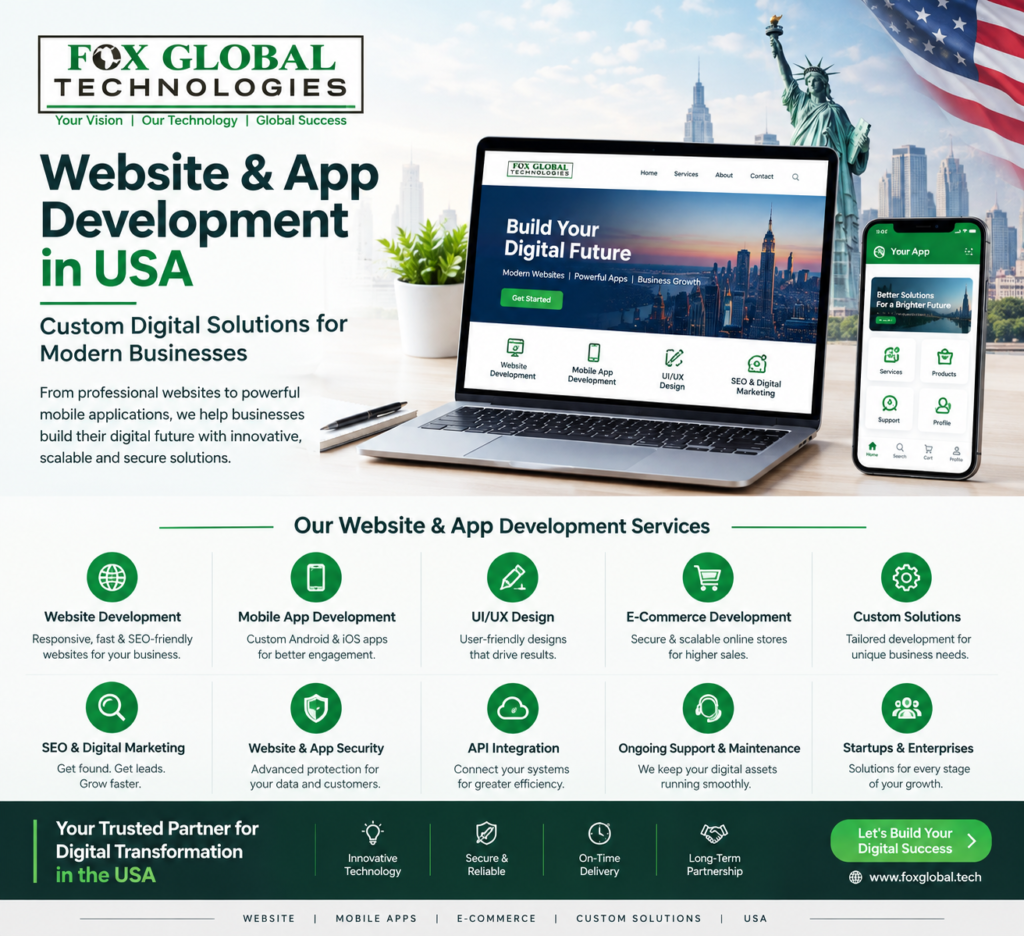
In today’s digital-first business environment, having a strong online presence is no longer optional. Whether you are a startup, small business, growing company, or established enterprise, your website and mobile application can play a major role in attracting customers, generating leads, increasing sales, and building long-term brand credibility.
Website and app development in the USA has become an important investment for businesses looking to create professional digital experiences and compete in an increasingly connected marketplace.
What Is Website Development?
Website development involves designing, building, testing, and maintaining websites for businesses, organizations, and individuals. A professional business website is more than an online brochure. It can function as a sales platform, lead-generation system, customer-support channel, booking system, e-commerce store, or complete business management interface.
Modern website development typically combines:
Responsive web design
Front-end development
Back-end development
Database integration
Content management systems
E-commerce functionality
API integrations
Search engine optimization
Website security
Performance optimization
A professionally developed website should work smoothly across desktops, laptops, tablets, and smartphones while providing visitors with a fast and intuitive experience.
Why Businesses in the USA Need Professional Websites
The U.S. market is highly competitive, and customers often research a business online before making a purchasing decision. A slow, outdated, or difficult-to-use website can negatively affect customer trust.
A modern website can help businesses:
Establish brand credibility
Generate qualified leads
Showcase products and services
Accept online inquiries and bookings
Sell products online
Improve search engine visibility
Connect with customers
Automate business processes
Support digital marketing campaigns
Your website can become the central hub connecting your Google search presence, social media, advertising campaigns, email marketing, CRM, and sales operations.
Mobile App Development in the USA
Smartphones have become an essential part of everyday life, making mobile applications an important digital channel for many businesses.
Mobile app development in the USA involves creating applications for platforms such as Android and iOS. Depending on business requirements, companies can develop customer-facing apps, employee applications, e-commerce apps, booking platforms, financial applications, educational apps, healthcare platforms, and many other solutions.
A mobile application can provide customers with a convenient way to interact with a business directly from their smartphones.
Common Types of Mobile Applications
Businesses can develop different types of applications, including:
E-commerce applications
Food delivery apps
Healthcare applications
Education and learning apps
Real estate applications
Travel and booking apps
Finance and business apps
Social networking applications
On-demand service apps
Customer loyalty applications
Internal business applications
Custom Website and App Development
Every business has different objectives. A standard template or generic application may not always provide the functionality required for a specific business model.
Custom development allows businesses to create digital products around their individual requirements.
For example, a company may need a website integrated with a CRM, payment gateway, inventory system, appointment booking platform, analytics dashboard, or third-party API.
Similarly, a mobile app may require features such as:
User registration
Secure login
Push notifications
Online payments
Location services
In-app messaging
Product catalogs
Booking systems
Customer dashboards
Admin panels
API integrations
Custom development makes it possible to combine these features into one digital ecosystem.
Technologies Used in Modern Web Development
Professional development teams may use a variety of technologies depending on the project’s requirements.
Common web technologies include:
HTML5
CSS3
JavaScript
React
Node.js
PHP
Python
WordPress
Laravel
MySQL
PostgreSQL
REST APIs
The right technology depends on factors such as project complexity, budget, scalability, security requirements, performance, and future development plans.
Technologies for Mobile App Development
Mobile applications can be developed using native or cross-platform technologies.
Popular approaches include:
Android development
iOS development
Flutter
React Native
Kotlin
Swift
Cross-platform development can allow businesses to build applications for multiple platforms while reducing development duplication, while native development can provide highly platform-specific performance and functionality.
The best approach depends on the application’s requirements and long-term business strategy.
Website and App Development for Startups
Startups often need to move quickly while controlling development costs. A well-planned Minimum Viable Product (MVP) can help a startup launch its idea, collect customer feedback, and improve the product based on actual market demand.
Instead of developing every possible feature at the beginning, businesses can prioritize essential functionality and gradually expand the platform.
This approach can help startups:
Launch faster
Test their business model
Collect user feedback
Reduce unnecessary development costs
Improve the product over time
E-Commerce Website and App Development
E-commerce continues to be an important part of the U.S. digital economy. Businesses selling products online need more than attractive product pages.
A modern e-commerce platform may include:
Product catalogs
Shopping carts
Secure checkout
Payment gateways
Customer accounts
Order management
Inventory management
Shipping integration
Discount systems
Reviews and ratings
Analytics
A mobile application can further improve the shopping experience by allowing customers to browse products, receive notifications, track orders, and make purchases from their smartphones.
Importance of UI/UX Design
Technology alone does not guarantee a successful digital product. User experience is equally important.
A good UI/UX strategy focuses on making websites and applications:
Easy to navigate
Fast and responsive
Visually appealing
Mobile-friendly
Accessible
Simple to understand
Consistent with the brand
The goal is to reduce friction and make it easy for users to complete the desired action, whether that means submitting a form, purchasing a product, booking an appointment, or contacting a business.
Website and App Security
Security should be considered from the beginning of the development process.
Businesses handling customer information, payments, accounts, or sensitive data should prioritize security measures such as secure authentication, data protection, regular updates, access controls, secure APIs, backups, and ongoing monitoring.
A secure digital platform helps protect both the business and its customers while supporting long-term reliability.
SEO-Friendly Website Development
Building a website is only the first step. Customers need to be able to find it.
SEO-friendly development can establish a strong technical foundation for search visibility. Important considerations include:
Mobile responsiveness
Fast page loading
Clean website architecture
Proper heading structure
Search-friendly URLs
Metadata
Structured content
Internal linking
Image optimization
Technical SEO
Local SEO
Combining website development with an effective SEO strategy can help businesses attract organic traffic and generate long-term leads.
How Much Does Website and App Development Cost in the USA?
The cost of development varies significantly depending on the project.
Factors that influence development costs include:
Number of pages or screens
Design complexity
Number of features
Custom functionality
Third-party integrations
Payment systems
Database requirements
Security requirements
Development technology
Testing requirements
Ongoing maintenance
A simple business website may require a significantly smaller investment than a custom SaaS platform, marketplace, e-commerce application, or enterprise-level mobile application.
Rather than choosing a developer solely based on price, businesses should consider functionality, scalability, security, development quality, communication, and long-term support.
Choosing the Right Development Partner
Selecting the right development company can have a major impact on the success of a digital project.
Before hiring a development partner, businesses should evaluate:
Previous projects
Technical expertise
Industry experience
Development methodology
Communication process
Testing procedures
Security practices
Maintenance and support
Project timelines
Pricing transparency
A good development partner should understand the business objective, not just the technical requirements.
The Future of Website and App Development
Website and app development is continuously evolving. Artificial intelligence, automation, cloud computing, personalization, conversational interfaces, and advanced analytics are increasingly influencing how businesses build and operate digital platforms.
Businesses that invest in scalable technology today can create a stronger foundation for future growth.
The future of digital development is not simply about creating a website or application. It is about creating connected digital experiences that help businesses operate more efficiently and customers interact more conveniently.
