
In today's digital-first economy, having a strong online presence is essential for businesses across the United States. Customers increasingly use websites and mobile applications to discover companies, compare products and services, make purchases, communicate with businesses, and manage their accounts.
Final Thoughts
*Website and app development in the USA* has become an important part of building and growing modern businesses.
A successful digital product combines *good design, reliable technology, strong security, usability, performance, and a clear understanding of customer needs*.
Whether a company needs a simple business website, an e-commerce platform, a customer portal, or a sophisticated mobile application, the development process should begin with clearly defined business goals and user requirements.
The right digital solution can help businesses improve customer engagement, streamline operations, generate leads, and create new opportunities for growth.
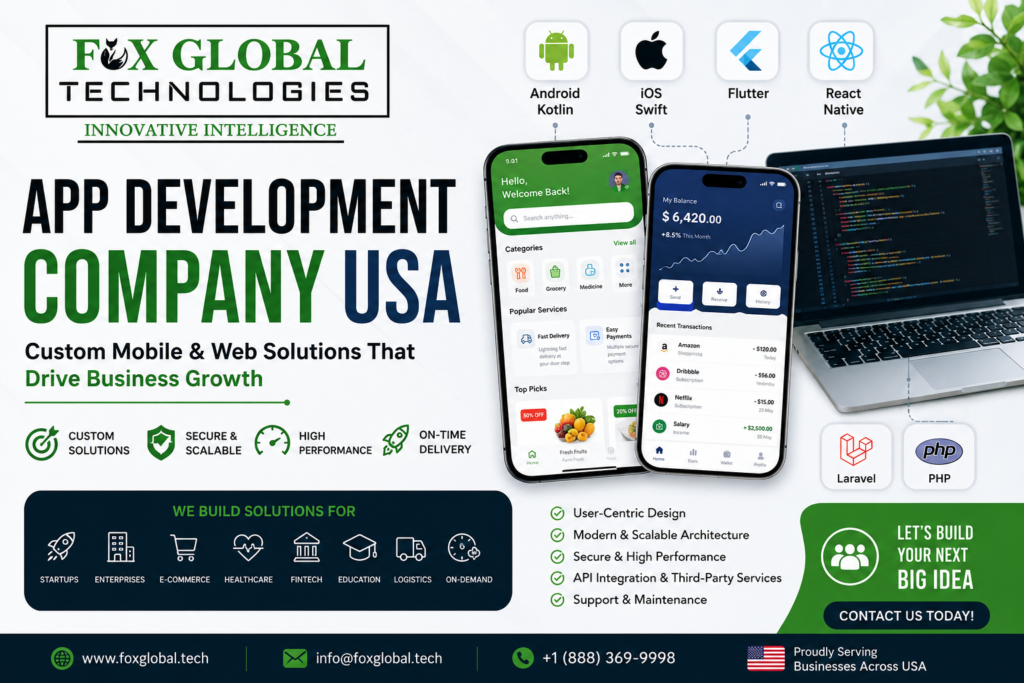
This has made *website and app development in the USA* an important part of business growth and digital transformation.
Whether you’re a startup, small business, enterprise, or growing e-commerce company, a professionally developed website or mobile app can help create a better customer experience, improve operational efficiency, and establish a stronger digital presence.
## What Is Website Development?
Website development involves designing, building, testing, and maintaining websites for businesses and organizations.
A modern business website can serve many purposes, including:
* Promoting products and services
* Generating leads
* Selling products online
* Accepting bookings and inquiries
* Providing customer support
* Sharing business information
* Building brand credibility
* Connecting with customers
Website development typically involves several components, including front-end development, back-end development, databases, APIs, security, hosting, and ongoing maintenance.
## What Is App Development?
App development involves creating applications for mobile devices, desktops, or web-based platforms.
Mobile apps can provide businesses with a direct channel to their customers. Depending on the business model, an application may allow users to:
* Create accounts
* Purchase products
* Schedule appointments
* Track orders
* Make payments
* Receive notifications
* Communicate with support
* Manage subscriptions
* Access personalized services
Businesses may develop applications for platforms such as *iOS and Android*, or use cross-platform technologies to create applications that operate across multiple devices.
# Why Website Development Matters for U.S. Businesses
A company’s website is often one of the first places potential customers interact with its brand.
A well-developed website should do more than simply look attractive. It should provide visitors with a fast, accessible, secure, and easy-to-use experience.
### 1. Establishing an Online Presence
A professional website gives a business a central location where customers can learn about its products, services, team, contact information, and business operations.
### 2. Generating Leads
Websites can be designed specifically to generate inquiries and potential customers through:
* Contact forms
* Quote requests
* Appointment scheduling
* Newsletter registrations
* Product inquiries
* Consultation requests
### 3. Supporting E-Commerce
For businesses selling products online, an e-commerce website can provide customers with a convenient way to browse products, add items to a cart, make payments, and track orders.
### 4. Improving Customer Experience
A responsive website that works properly on desktops, tablets, and smartphones can make it easier for customers to interact with a business.
# The Importance of Mobile App Development
Mobile applications can provide functionality beyond what a traditional website offers.
For example, an app can use device capabilities such as:
* Push notifications
* Camera access
* Location services
* Biometric authentication
* Mobile payments
* Offline functionality
This can make apps particularly useful for businesses that need frequent or personalized customer interactions.
## Native vs. Cross-Platform App Development
Businesses generally have several approaches to application development.
### Native Development
Native applications are built specifically for a particular platform, such as iOS or Android.
This approach can provide strong platform integration and performance.
### Cross-Platform Development
Cross-platform frameworks allow developers to create applications that work across multiple platforms using a shared codebase.
This can potentially simplify development and maintenance, depending on the project requirements.
The right approach depends on factors such as the application’s functionality, target audience, budget, performance requirements, and long-term development plans.
# Custom Website and App Development
Every business has different requirements.
A restaurant may need online ordering and reservations, while a healthcare organization may need appointment management and secure customer portals. An e-commerce company may require product catalogs, payment processing, inventory integration, and order tracking.
For this reason, *custom website and app development* can be useful when standard templates or off-the-shelf software cannot meet a company’s requirements.
Custom development can include:
* Custom user interfaces
* Business dashboards
* Customer portals
* Payment integration
* CRM integration
* API development
* E-commerce functionality
* Booking systems
* Inventory management
* Analytics dashboards
* Automation tools
# Key Technologies Used in Website and App Development
Modern development projects can use a wide range of technologies.
Website projects may involve technologies such as:
* HTML
* CSS
* JavaScript
* React
* Next.js
* Node.js
* PHP
* Python
* SQL and NoSQL databases
Mobile applications may be developed using technologies such as:
* Swift
* Kotlin
* React Native
* Flutter
The technology stack should be selected based on the project’s requirements rather than simply choosing the most popular technology.
# Website and App Development Process
A professional development project usually follows several stages.
### 1. Discovery and Planning
The development team first identifies the business objectives, target users, required features, technical requirements, and project scope.
### 2. UI/UX Design
Designers create the visual interface and user experience.
The goal is to make the website or application intuitive, accessible, and aligned with the company’s brand.
### 3. Development
Developers build the front-end and back-end functionality, databases, APIs, integrations, and other required components.
### 4. Testing
The application or website should be tested across relevant devices, browsers, operating systems, and use cases.
Testing may include:
* Functional testing
* Performance testing
* Security testing
* Mobile responsiveness testing
* Usability testing
### 5. Launch
After testing and final approval, the website or application can be deployed.
### 6. Maintenance
Development doesn’t necessarily end at launch.
Businesses may need ongoing updates, security improvements, bug fixes, performance optimization, and new features as their requirements change.
# Website Development and SEO
A website should be built with search engine visibility in mind.
Technical SEO considerations can include:
* Fast page loading
* Mobile responsiveness
* Proper HTML structure
* Search-friendly URLs
* Metadata
* Structured data where appropriate
* Internal linking
* Accessible content
* Secure HTTPS implementation
However, technical optimization is only one part of SEO. High-quality, useful content and a strong overall user experience are also important.
# Security in Website and App Development
Security should be considered throughout the development process.
Depending on the application, security measures may include:
* Secure authentication
* Encryption
* Access controls
* Secure payment processing
* Input validation
* Regular software updates
* Vulnerability testing
* Secure API design
* Data protection practices
Businesses handling sensitive customer information should pay particular attention to applicable legal and industry requirements.
# How Much Does Website and App Development Cost in the USA?
Development costs can vary significantly depending on the project’s complexity.
Factors that can affect the cost include:
* Number of pages or screens
* Custom design requirements
* Number of features
* Third-party integrations
* Database complexity
* Payment functionality
* User accounts
* Administrative dashboards
* Security requirements
* Development timeline
* Ongoing maintenance
A basic business website and a large custom application can have dramatically different development requirements and budgets.
Instead of focusing only on the initial development price, businesses should also consider *maintenance, hosting, security, upgrades, and future development costs*.
# Choosing a Website and App Development Company
When selecting a development partner in the USA, businesses should evaluate more than pricing.
Important considerations include:
### Portfolio
Review previous projects to understand the company’s design and development capabilities.
### Technical Expertise
Make sure the development team has experience with the technologies and integrations required for the project.
### Communication
Clear communication can help prevent misunderstandings about scope, timelines, and functionality.
### Security Practices
Ask how the company approaches application security, data protection, testing, and maintenance.
### Post-Launch Support
A reliable development partner should be able to provide maintenance and technical support after launch if required.
# The Future of Website and App Development
Website and app development continues to evolve as businesses adopt technologies such as artificial intelligence, automation, cloud computing, advanced analytics, and personalized digital experiences.
AI-powered features can be incorporated into applications for use cases such as:
* Customer support
* Search
* Recommendations
* Content assistance
* Data analysis
* Business automation
However, technology should support a clear business objective. Adding features simply because they are new does not necessarily improve a product.
